

(Only for Ready Minds)
Warning: This is the unfiltered version. It’s recommended to read the official version first.
There are questions that almost no one dares to ask because, deep down, we all fear the answer.
And this is one of them:
Jesus was never a Christian.
Read that again.
Slowly.
The man millions follow today, the one depicted in stained glass windows, hymns, and sermons… never identified with a religion called Christianity. He never founded a church, never changed Saturday to Sunday, never celebrated Christmas, and never said we had to eat communion wafers.
So the inevitable question arises:
What happened along the way?
The answer is documented, uncomfortable, and has the power to shake what you thought you knew. But if you’re here, it’s because you sensed something didn’t quite add up. So take a deep breath and let’s continue.
The thought experiment that reveals what no one told you
Imagine this: you have a time machine.
Year 80 CE. Not even a century has passed since Jesus’s death.

Press Play to start the video
You open the door to a humble home. It smells of olive oil, bread, and parchment. A group of people is gathered. They’re speaking Hebrew and Aramaic. They keep the Sabbath. They read the Torah. They’re discussing a Jewish rabbi named Yeshua, who according to them is the Messiah promised to Israel.
Now ask them:
“Excuse me, where’s the Christian church?”
Silence. Confused looks.
“The what?”
Because that word didn’t exist yet. What you’re witnessing isn’t a Christian church: it’s a messianic Jewish community.
There was no Christianity.
There were Jews who believed the Messiah had already come… and Jews who didn’t. But they were all still Jews.
Jesus was born Jewish. Lived as a Jew. Taught as a Jew. Died as a Jew. And so did his first followers.
So when did the rupture occur?
Who caused it?
And why?
Rome enters the scene: when politics dictates theology
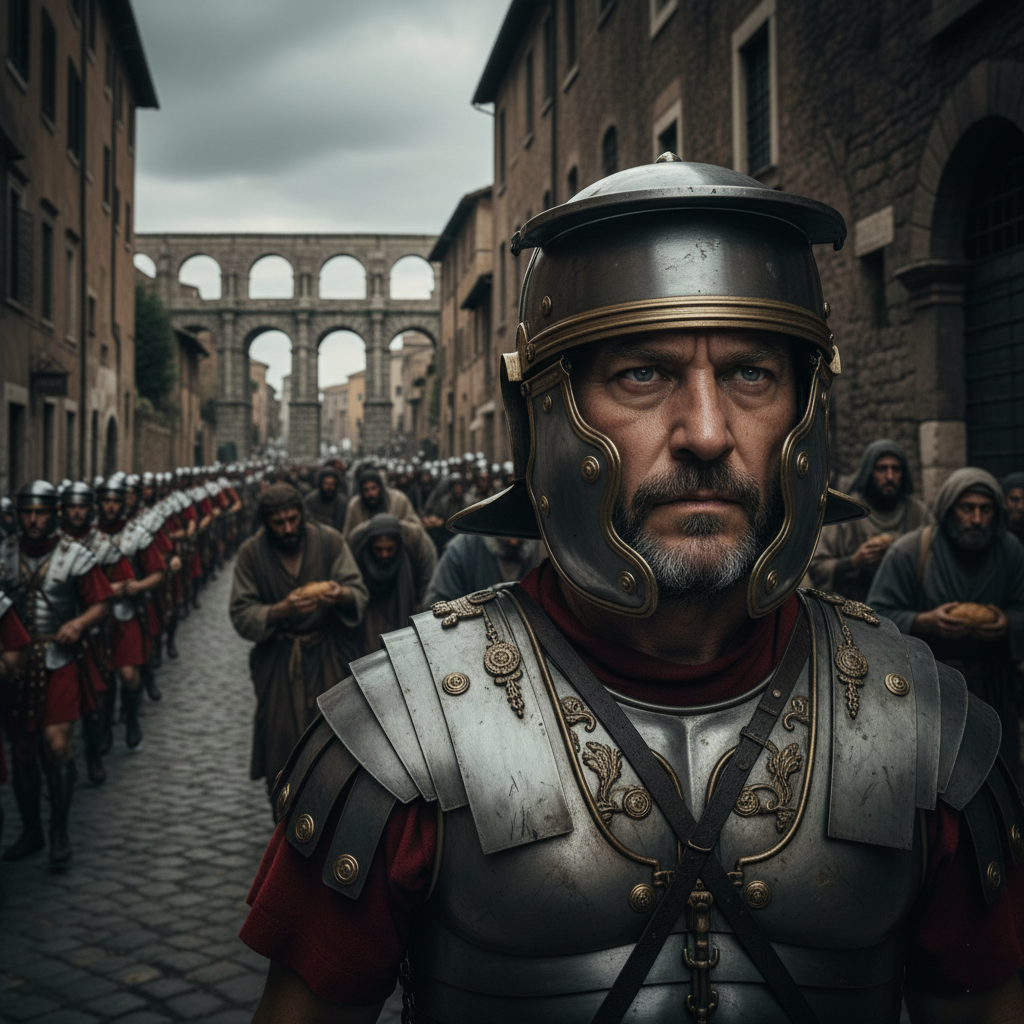
To understand the divorce between Judaism and Christianity, we have to look where almost no one wants to look: Roman imperial politics.
First and second centuries.
Jews rebel against Rome in bloody wars. The Temple is destroyed in 70 CE.
Entire cities razed.
Entire communities exterminated.
For the empire, being Jewish wasn’t a religion: it was a threat.
A suspicion.
An enemy.
Now imagine the first non-Jews who start becoming interested in this movement based on a rabbi crucified by Rome. They meet with Jews. They keep some of their customs. They speak of a “kingdom” that isn’t Caesar’s.
How do you think the empire saw them?
With distrust.
With fear.
With the same scrutiny they applied to the rebels of Judea.
And so the dilemma emerges: If these new believers keep looking too Jewish… Rome crushes them. If they differentiate themselves… they survive.
And that’s how the process that would change world history began.
The great divorce: when survival superseded truth

Centuries after Jesus, leaders from the 2nd and 3rd centuries—men who never knew him—began a slow, calculated, and strategic process: de-Judaizing the movement.
Not by divine revelation. Not because “God told them to.” But through political pragmatism.
This is what they did:
– They changed the holy day. It shifted from Shabbat (Saturday) to Sunday, the day dedicated to the Sun in Rome, to differentiate from Jews and align with imperial culture.
– They changed Passover. It was no longer celebrated on 14 Nisan. They created a new formula to ensure it never coincided with Jewish Passover. The message was clear: we are not them.
– They created Replacement Theology. “The Church is the new Israel; the Jews were rejected by God.” A useful narrative to justify the distance.
– They rewrote Jesus’s death. Although he was executed by Rome, the narrative was adjusted to blame the Jews and free the empire from responsibility.
This wasn’t coincidence.
It was religious politics.
A strategic redesign.
Figures like Justin Martyr, Ignatius of Antioch, or Marcion weren’t seeking the master’s original message. They were building a functional, manageable religion accepted by Rome.
And they succeeded.
In the 4th century, Constantine made it the official religion.
But the spiritual cost was enormous.
What we lost along the way

When we severed Jesus’s Jewish roots, we didn’t just lose history. We lost depth, symbolism, and the essence of the original message.
Dr. Mario Sabán explains it with a perfect metaphor: the onion.
The spirituality we receive today is an onion full of layers.
Roman layer.
Medieval layer.
Layer of councils.
Layer of traditions Jesus never taught.
You peel them away, and yes, it hurts.
It stings.
It makes you cry.
But when you reach the center, something different appears: A Jewish rabbi who spoke of internal transformation, deep justice, personal responsibility, and direct connection with the divine without intermediaries.
Jesus wasn’t talking about founding an institutional religion. He was talking about awakening.
Paul: the greatest misunderstanding
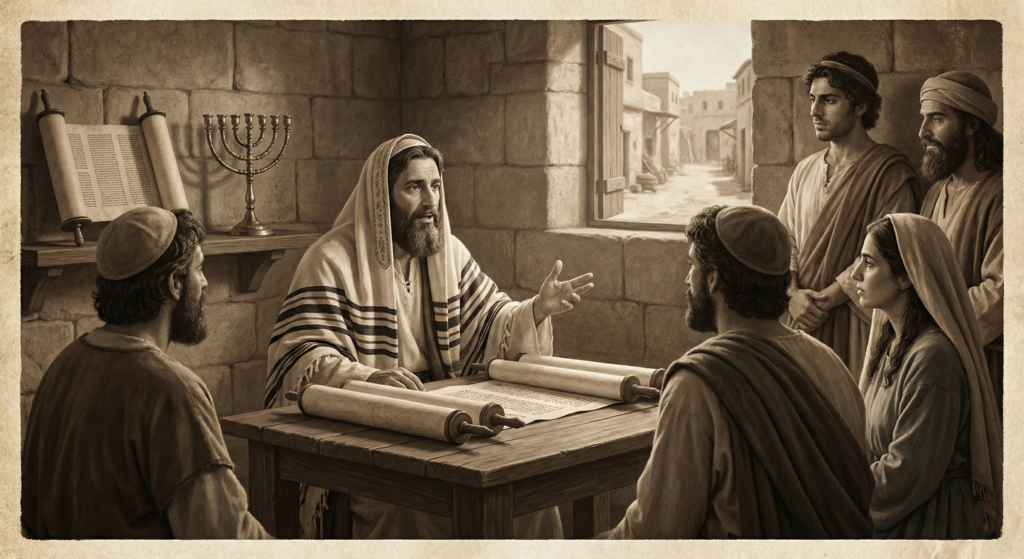
Paul has been accused of inventing Christianity, but historically that doesn’t hold up.
Paul was Jewish and died Jewish. He taught in synagogues. He was accepted by rabbinic communities. If he had preached an anti-Jewish religion, he wouldn’t have lasted a day.
His debate wasn’t theological, but practical: How much Torah should new non-Jewish believers follow?
That was the issue.
How to include without destroying.
How to open the door without tearing down the house.
But centuries later, his letters—written to solve local problems—were converted into a universal theology alien to his original intention.
Paul was used.
Interpreted out of context.
And turned into the founder of something he never sought to create.
The uncomfortable question that lingers
If Jesus—Yeshua ben Yosef—walked into your church today and saw what you see…
Would he recognize anything?
Would he feel at home?
Or would he think he walked into the wrong place?
And there’s an even deeper question:
Is your faith based on what he said… or on what others centuries later said he had said?

Conclusion: Truth doesn’t need an empire
This article doesn’t seek to destroy your faith.
It seeks to liberate it.
Because in the attempt to make Jesus’s message “acceptable” to Rome, we stripped it of its root and original power.
We created a religion about Jesus, but ignored the religion of Jesus.
The system you inherited isn’t the one he lived.
It’s the one Rome approved to maintain order.
And recognizing this isn’t betrayal.
It’s honesty.
Truth doesn’t need imperial structures.
It doesn’t need mandatory dogmas.
It doesn’t need to be protected from the past.
Truth stands on its own.
And when you see it… it makes you uncomfortable. But it also liberates.
It’s time to deprogram ourselves.
To peel away the layers.
To look behind the veil.
To return to the origin.
Because if Jesus wasn’t a Christian… what are we really following?

Suggested sources and further study
Seminar by Dr. Mario Sabán: “Jesus before Christianity”
History of the Councils of Nicaea and Constantinople
Studies on Second Temple Judaism
Contextual analysis of Pauline letters